EN


LinkLab Design Background
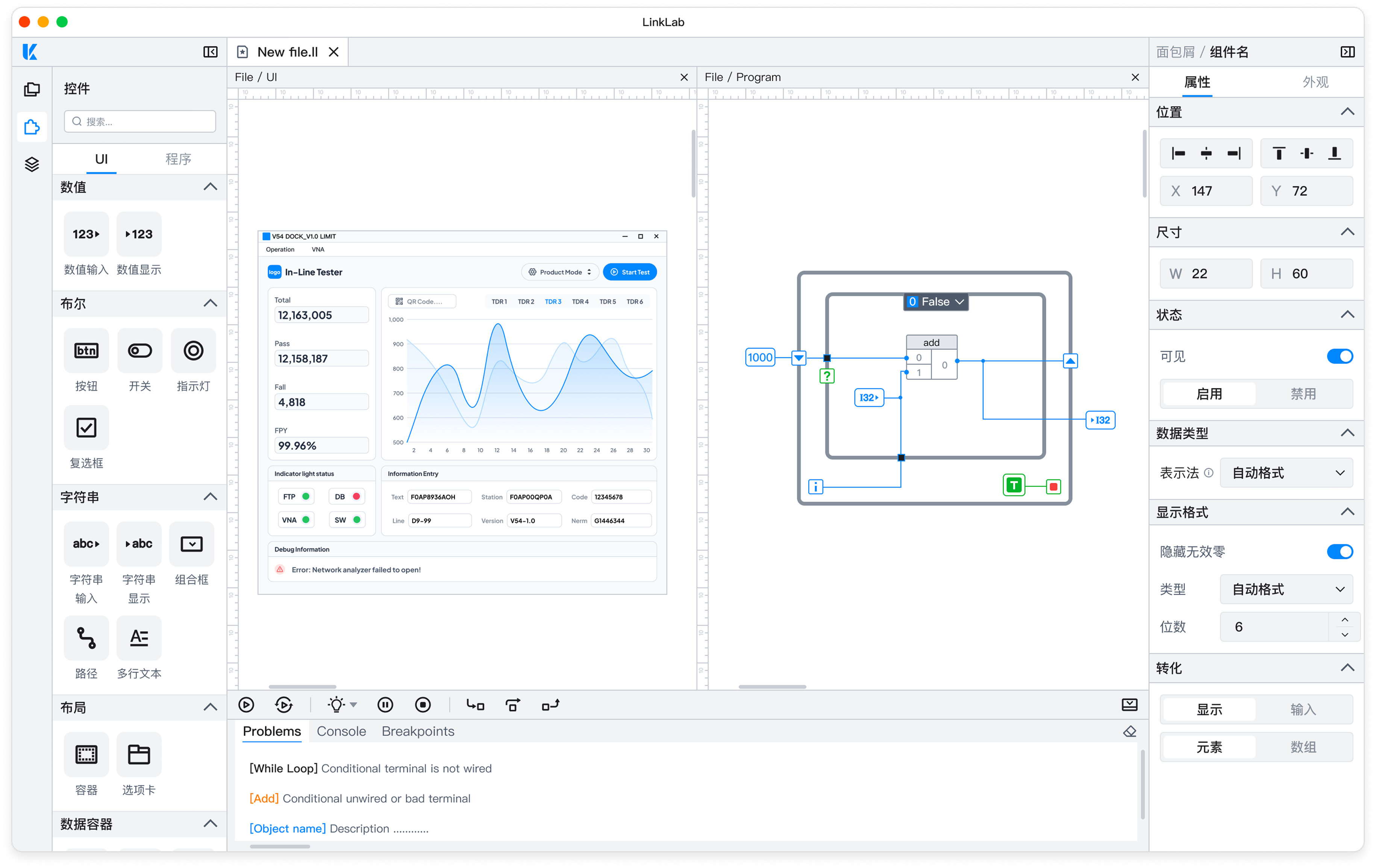
LinkLab is designed as a unified integration platform for the company’s automated test projects. Its core objective is to provide a web-based low-code development environment for building automation and measurement applications with consistent visual styles and standardized design specifications.
Users can quickly create automated test interfaces through component-based configuration, drag-and-drop layout, data connection, and interaction setup, reducing development effort and improving engineering efficiency.
LinkLab Platform Advantages
Low-Code Development
Pages, workflows, and interaction logic can be created through simple drag-and-drop operations, significantly reducing repetitive development work and allowing R&D engineers to focus on core test logic and application innovation.
A wide range of style settings and configuration options enables high-fidelity reproduction of prototype designs and interactive behaviors, helping ensure consistent visual presentation and a better user experience.
Rich Component Library
LinkLab provides a comprehensive library of UI components, control elements, and design resources. It supports flexible appearance customization and enables engineers to rapidly build complex measurement, control, and test interfaces for a wide range of application scenarios.
Functional Framework
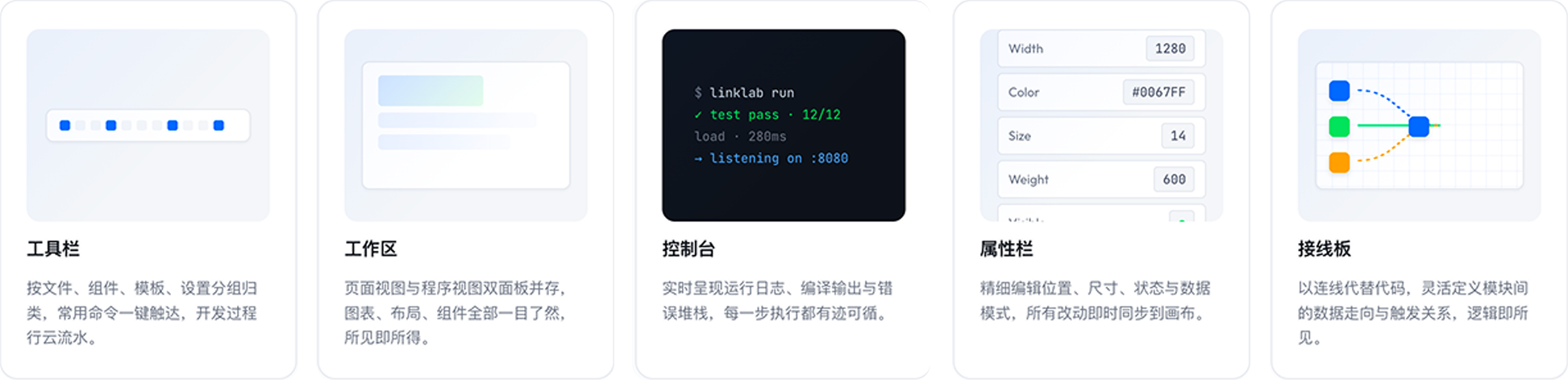
A modular functional architecture is designed to streamline the development of measurement and control software and improve overall engineering efficiency.
Visual Programming
Node-Based Workflow Design
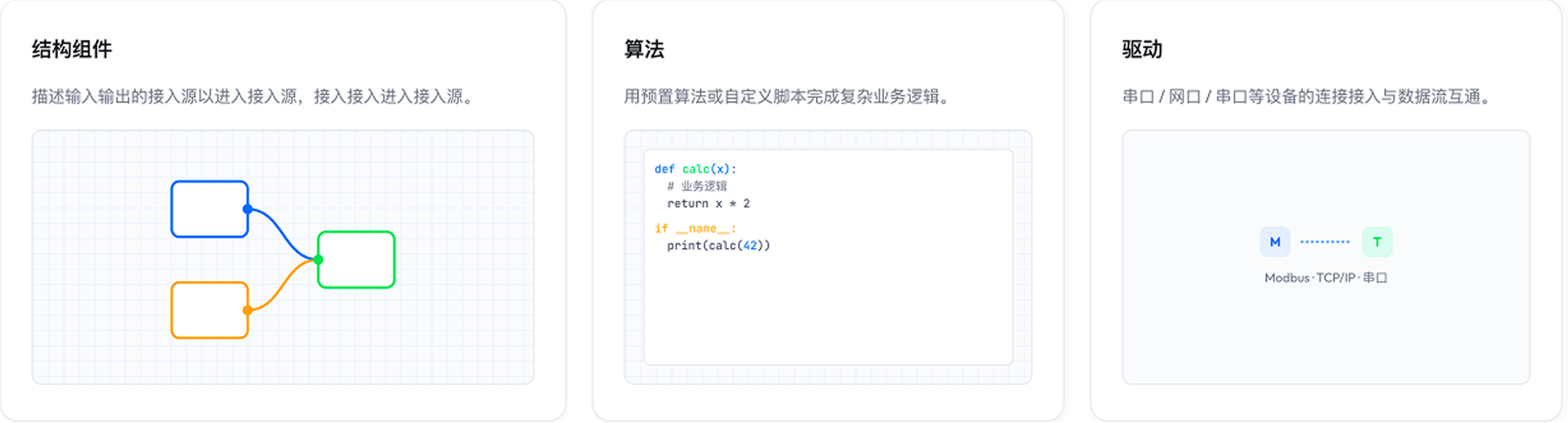
Users can drag and drop functional nodes and connect data flows visually, making the complete signal, control, input, and output workflow easy to understand and configure.
Functional Framework
Carefully designed functional modules efficiently assist in the development workflow of measurement and control software.
Visual programming
• Structural components
Drag and drop nodes, connect data streams, and the entire input and output chain of the measurement and control process is clear at a glance.
Application Cases
PCB Test Solution
Based on LinkLab’s drag-and-drop UI development and graphical data-flow programming capabilities, engineers can rapidly build PCB defect detection and test control interfaces.
The platform supports direct integration with VISA- and GPIB-based instruments, reducing reliance on traditional LabVIEW-based development and significantly shortening test system development cycles.
USB Test Board
By leveraging LinkLab’s ASIO communication capabilities and rich UI components, engineers can quickly develop USB test board control interfaces for automated data acquisition and real-time waveform visualization.
Communication functions can be configured without developing device drivers from scratch, helping reduce development effort and improve implementation efficiency.
Robot Comprehensive Test Solution
LinkLab integrates multi-sensor data acquisition, real-time waveform visualization, and instrument control capabilities to support robot comprehensive test platforms.
Its visual development environment enables rapid iteration, flexible configuration, and customized test workflows for different robotic test applications.
Acoustic Test Solution
For acoustic testing applications involving audio interfaces, microphones, speakers, and other electroacoustic devices, LinkLab provides real-time waveform and spectrum analysis components.
The platform supports measurement interfaces for parameters such as frequency response, total harmonic distortion (THD), and sound pressure level (SPL), together with automated test workflows and report generation.
Automated Production Testing
For automated production-line test stations, LinkLab provides workflow orchestration and data management capabilities to build integrated test interfaces covering automatic execution, PASS/FAIL evaluation, statistical analysis, and data export.
It also supports multi-station coordination and complete test record traceability.
Automotive Electronics Test Solution
For automotive electronics production-line testing, LinkLab provides flexible UI components, measurement and control functions, and customizable interaction logic.
The platform enables engineers to build production-oriented test and control interfaces with customized visual layouts and complex workflow requirements.
 Tel:173 9470 0835
 E-mail:support@lk-tek.com
 Add:No. 246 Wencheng East Road, Siyang County Economic Development Zone, Suqian City, Jiangsu Province