EN


As electronic products continue to evolve toward higher integration, smaller form factors, and greater functionality, the number of components, test nodes, and electrical interconnections on PCBAs (Printed Circuit Board Assemblies) is also increasing. For electronics manufacturers, the ability to quickly identify open circuits, short circuits, abnormal component parameters, and soldering defects before products enter functional testing and final assembly has a direct impact on production yield, rework efficiency, and overall product quality.
In this process, ICT (In-Circuit Test) is an important electrical inspection method used during PCBA manufacturing. By bringing test probes into contact with designated test points on the PCB layout, ICT can verify circuit connectivity and relevant electrical parameters, helping production teams identify manufacturing abnormalities at an early stage.
ICT can detect open circuits and short circuits, and supports four-wire testing of resistors, capacitors, inductors, transistors, and diodes. It can also identify PCBA process defects such as missing components, incorrect component placement, parameter deviations, and solder bridging.
Unlike functional testing, which focuses on verifying the performance of the complete product, ICT is mainly used during the PCBA manufacturing stage to check circuit continuity and basic electrical characteristics.
When an abnormality is detected, the system can locate the fault down to the component level or the specific open/short circuit point. Test reports can then be displayed on screen or printed out to support fast troubleshooting and repair on the production floor.
To meet the PCBA inspection requirements of the electronics manufacturing industry, the LK-F6016 ICT Automatic In-Line Test Fixture adopts a pneumatic fixture-based testing method. Through a dedicated test fixture, it establishes stable electrical connections with PCBA test points and is suitable for in-line quality inspection in mass-production environments.
The standard configuration supports 256 test points and can be expanded to up to 2,048 points. Test solutions can be flexibly customized according to the number of test points, inspection standards, and application requirements of different PCBA products, providing strong adaptability across multiple production scenarios.
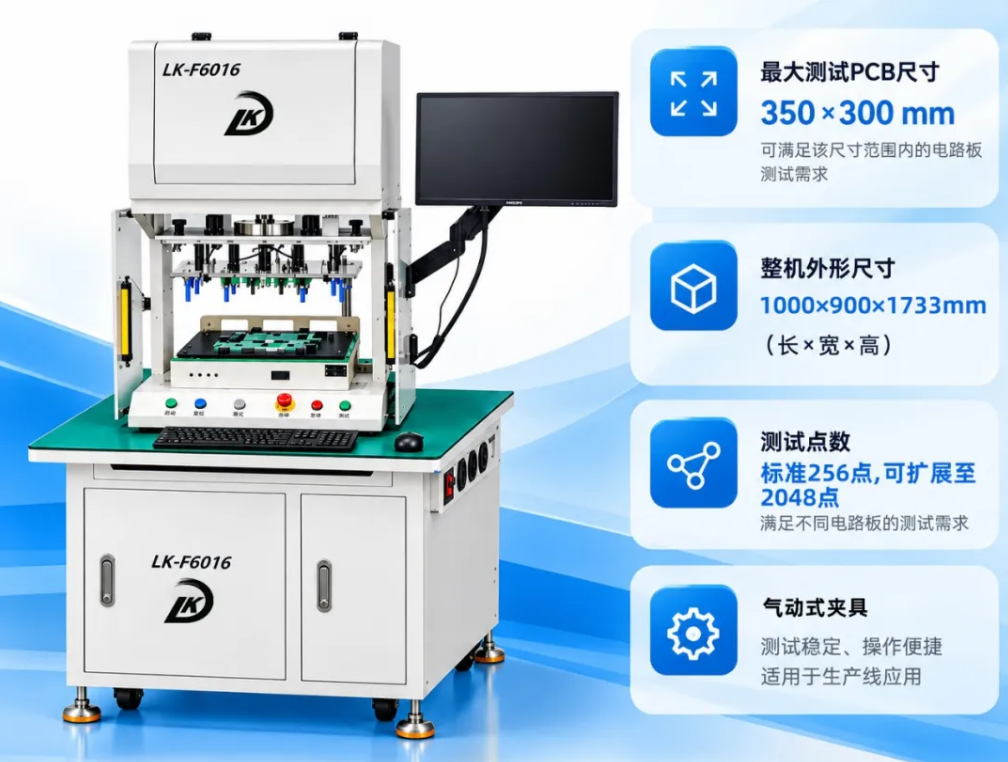
In terms of testing capability, the system is equipped with a four-wire precision measurement solution, bringing ICT capabilities into automated production-line testing. It can automatically locate fault points and quickly output test results.
With stable pneumatic clamping and reliable probe contact, the system helps maintain consistency and efficiency during high-volume PCB inspection and is well suited to continuous in-line quality control operations.
During high-volume PCBA production, circuit boards integrate a large number of components, circuit networks, and test nodes. Any abnormality in assembly or soldering can directly affect the quality of the finished product.
The LK-F6016 ICT Test Fixture provides multi-dimensional coverage of common process defects:
Circuit-level inspection:
Accurately detects connectivity faults such as open circuits and short circuits on PCBAs.
Component assembly inspection:
Identifies missing components, incorrect component placement, parameter deviations, and other assembly-related issues.
Soldering process inspection:
Detects soldering defects such as solder bridging and other manufacturing abnormalities.
In addition to basic component parameter testing, the system also supports testing of current, voltage, frequency, PWM, signal delay, GPIO enable control, and other electrical parameters and control signals.
After testing, the system can locate defective components or circuit fault points and output inspection reports through the user interface or printer. This makes faults easier to identify and supports on-site rework, quality traceability, and process improvement.
For production-oriented test equipment, application performance depends not only on core testing capability, but also on system compatibility, operating environment, power supply conditions, and expansion options.


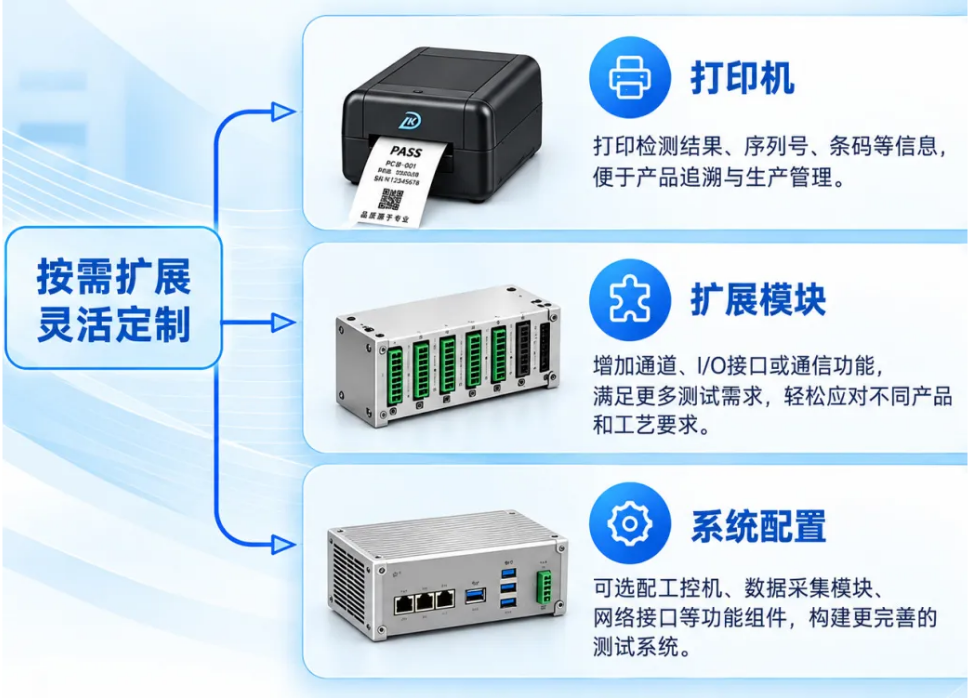
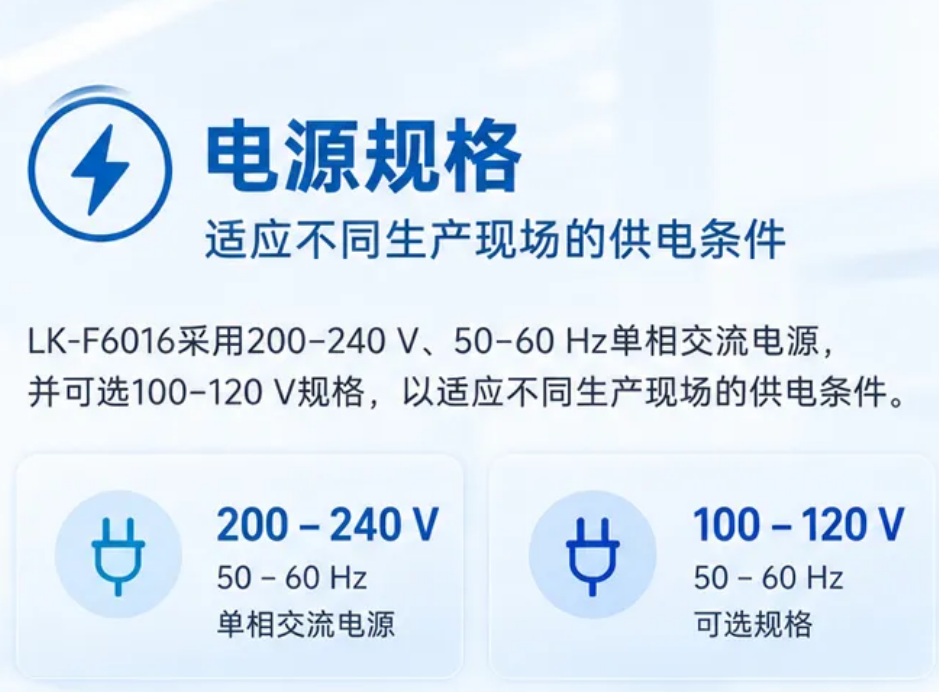
For different PCB types, test-point configurations, and application requirements, the equipment can be flexibly configured through dedicated fixtures and expansion modules, providing a stable and scalable testing solution for PCBA manufacturing.
If you are looking for ICT test equipment, PCBA test fixtures, automated test systems, or customized testing solutions, please feel free to contact us for more information.
 Tel:173 9470 0835
 E-mail:support@lk-tek.com
 Add:No. 246 Wencheng East Road, Siyang County Economic Development Zone, Suqian City, Jiangsu Province